Astaxanthin vs fucoxanthin for vision: the OptiPlax view
Updated August 2026 · reviewed by the OptiPlax Research Team. We are an independent information resource, not a medical provider, and this article is educational rather than medical advice.
Astaxanthin and fucoxanthin are both marine carotenoids, but they are not interchangeable: astaxanthin is the deep-red antioxidant grown from the microalga Haematococcus pluvialis, while fucoxanthin is the golden-brown pigment found in kelp and other brown seaweeds. They come from different parts of the sea, carry different chemistry, and are researched for different jobs — which is exactly why OptiPlax pairs them instead of betting on one.
Astaxanthin vs fucoxanthin for vision, in plain terms.
- Astaxanthin
- A red algae antioxidant from Haematococcus pluvialis; the most-studied marine carotenoid for light-exposed eye tissue and eye comfort.
- Fucoxanthin
- A golden kelp carotenoid from brown seaweed; researched mainly for metabolism and general antioxidant activity, with limited direct eye evidence.
- Red vs brown pigment
- Same carotenoid family, different colours and structures — and different marine sources rather than one plant.
- Where OptiPlax fits
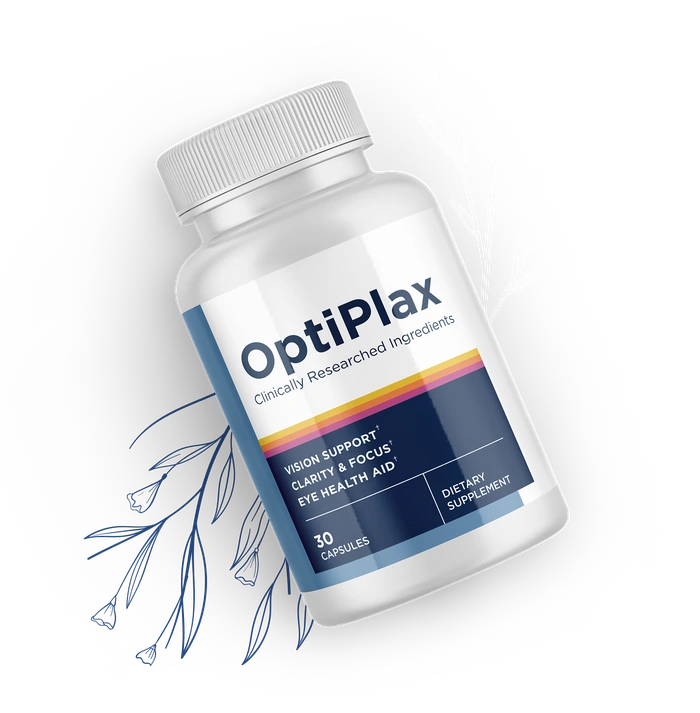
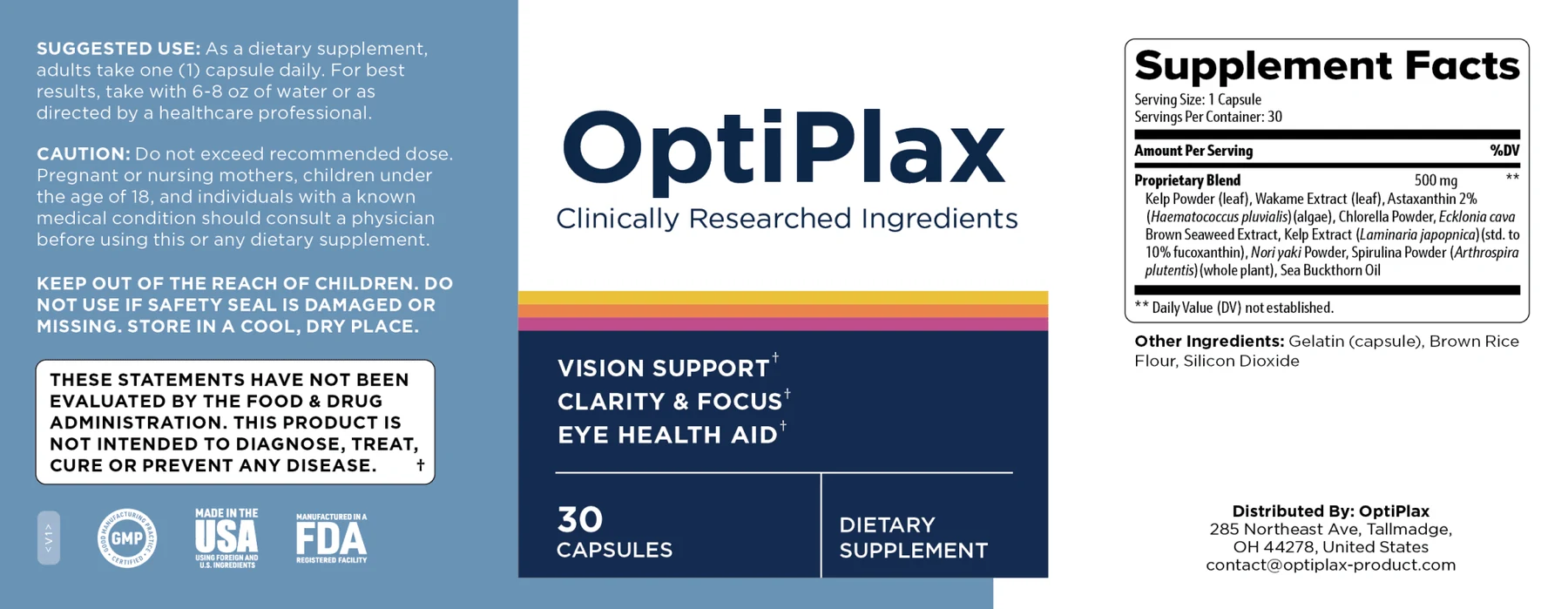
- OptiPlax combines astaxanthin with a 500 mg kelp, wakame, chlorella and spirulina blend, so both pigments share one daily capsule.
If you have read the OptiPlax label you have met both names. They sit side by side in the marine-carotenoids compared conversation, they are both antioxidants, and they both trace back to algae — so it is easy to assume they do the same thing. They do not. This guide walks through what each pigment is, where it comes from, how the evidence for each actually stacks up, and why a blend rather than a single isolate is the honest way to use them. For the product itself, see our OptiPlax review and ingredient breakdown.
What is astaxanthin, and where does it come from?
Astaxanthin is a red-orange carotenoid antioxidant produced by the freshwater microalga Haematococcus pluvialis when it is stressed by sunlight and scarcity. The algae make the pigment as a kind of internal sunscreen, and that origin story is why astaxanthin is so often discussed in the context of light-exposed tissue. It is the same molecule that turns wild salmon, shrimp and flamingos pink: they accumulate it by eating up the marine food chain that starts with algae.
Chemically, astaxanthin sits at the far end of the carotenoid family. Its structure lets it span a cell membrane and quench reactive molecules at both the inner and outer surfaces, which is the mechanism most often cited in laboratory work. Among the marine carotenoids, it also has the deepest bench of human research — including small studies on eye fatigue and accommodation in people who spend long hours on screens.
Why is astaxanthin the one with eye research?
Astaxanthin earned its reputation partly because it reaches tissues that many antioxidants do not, and partly because early Japanese research focused specifically on visual fatigue. The evidence base is still modest — mostly small trials rather than large, long-term ones — but it is the reason astaxanthin, not fucoxanthin, is the headline pigment in most eye formulas, OptiPlax included. Our deeper dive lives in the astaxanthin and marine carotenoids guide.
What is fucoxanthin, and why is it golden rather than red?
Fucoxanthin is a golden-brown carotenoid found in brown seaweeds such as kelp, wakame and hijiki, where it drives photosynthesis and gives the plants their characteristic olive colour. Its colour is a clue to its chemistry: fucoxanthin carries an unusual structure that shifts its light absorption away from the reds and into the browns, and that same structure is thought to underpin its antioxidant behaviour in the lab.
Where astaxanthin is a food-chain pigment that ends up in animals, fucoxanthin stays largely in the seaweed itself. In the body it is converted into a compound called fucoxanthinol, and most of the research interest has followed that pathway into metabolism and fat tissue rather than the eye. That is an important honesty point: fucoxanthin is a genuine marine antioxidant with a long history in coastal diets, but it is not, on current evidence, a proven stand-alone vision ingredient.
Is fucoxanthin a vision ingredient or a metabolism one?
On the published record, fucoxanthin is studied far more for metabolism and general antioxidant activity than for sight. It belongs in an eye formula as part of the whole brown-seaweed nutrient package — supplying carotenoids, minerals and trace nutrients — rather than as the star of the vision story. If you want the seaweed side in detail, see our notes on fucoxanthin for eye health and brown seaweed extract for eyes.
How do the two marine carotenoids compare?
Marine carotenoids compared side by side make the division of labour obvious: astaxanthin is the researched eye antioxidant, fucoxanthin is the whole-food seaweed antioxidant. The table below lays out the practical differences that matter when you read an ingredient label.
| Feature | Astaxanthin | Fucoxanthin |
|---|---|---|
| Colour | Deep red-orange | Golden brown |
| Main source | Haematococcus pluvialis microalgae | Kelp, wakame and other brown seaweed |
| Natural role | Algal “sunscreen” against light stress | Photosynthetic pigment in seaweed |
| Eye research | Small human studies on eye fatigue | Limited direct eye evidence |
| Other research | Skin, exercise, general antioxidant | Metabolism, fat tissue, antioxidant |
| Role in OptiPlax | Headline vision antioxidant | Part of the 500 mg marine blend |
Notice that the two pigments do not overlap so much as bracket each other. Astaxanthin brings the strongest eye-specific case; fucoxanthin brings the breadth of a whole sea vegetable. Neither replaces lutein and zeaxanthin, the pigments that physically concentrate in the macula — those come mainly from greens and egg yolk, and are a separate part of the eye-nutrition picture we cover in best foods and nutrients for eye health.

Both pigments, one capsule
Rather than choosing red or gold, OptiPlax pairs astaxanthin with a 500 mg blend of kelp, wakame, chlorella and spirulina — so you get both marine carotenoids daily. See the exact dose in OptiPlax on the label, and today's best per-bottle value in the six-bottle bundle.
See the exact dose in OptiPlax — from $49/bottleWhat does the evidence actually say?
Honest answer: the two pigments are at very different stages of research maturity, and it would be misleading to present them as equals. The most useful thing a comparison can do is show where the science is solid and where it is still thin.
The two pigments are not researched to the same depth, and that asymmetry is the single most useful fact when comparing them. Astaxanthin has been tested directly against eye-strain outcomes in a randomised double-blind trial (Hecht KA et al., Advances in Therapy, 2025), whereas fucoxanthin’s literature is overwhelmingly biochemical and metabolic rather than ophthalmic (Miyashita K et al., Archives of Biochemistry and Biophysics, 2020).
| Claim | Astaxanthin | Fucoxanthin |
|---|---|---|
| Is an antioxidant in lab tests | Well supported | Well supported |
| Human eye-fatigue data | Some small trials | Very limited |
| Large long-term eye trials | Lacking | Lacking |
| Metabolism research | Limited | The main focus |
| Traditional dietary use | Via seafood | Via sea vegetables |
Two things follow from that table. First, no marine carotenoid has the kind of large, long-term vision trial that would let anyone promise an outcome — so be sceptical of any product that does. Second, the sensible way to use pigments with modest, complementary evidence is together and as part of a whole diet, which is precisely the blend approach rather than a mega-dose of one isolate. Individual results vary, and none of this is a substitute for an eye exam.
Why does OptiPlax combine both pigments?
OptiPlax combines astaxanthin and fucoxanthin because the two carotenoids answer different questions, and a blend hedges the uncertainty better than a single isolate can. Astaxanthin supplies the researched, eye-oriented antioxidant; the 500 mg marine blend of kelp, wakame, chlorella and spirulina supplies fucoxanthin in its natural whole-food company, along with other sea nutrients. The result is a spread of red and golden pigments in one daily capsule rather than a bet on one colour.
This mirrors how these nutrients show up in coastal diets, where nobody eats isolated fucoxanthin — they eat the seaweed. Whole-food carotenoid content is naturally variable, so the honest way to read the panel is as a blend amount, not a precise milligram of each pigment. For the mineral side of kelp, our kelp, iodine and eye health article goes further.
How should you take astaxanthin and fucoxanthin?
Because both are fat-soluble carotenoids, the practical advice is the same for either pigment: take them with a meal that contains some fat, be consistent, and give it time. Carotenoids accumulate in tissue over weeks to months, so a single dose does nothing dramatic — the point is steady daily intake alongside a colourful diet.
- With food: one OptiPlax capsule with a meal containing some fat improves carotenoid absorption.
- Consistency: daily use matters more than dose size; carotenoids build up gradually.
- Alongside diet: keep eating greens, eggs and oily fish for lutein, zeaxanthin and omega-3s the capsule does not replace.
- Check with a professional: if you take medication, are pregnant, or have a thyroid condition (kelp supplies iodine), ask your clinician first.
Frequently asked questions
What is the difference between astaxanthin and fucoxanthin?
Astaxanthin is a red antioxidant carotenoid from the microalga Haematococcus pluvialis, while fucoxanthin is a golden-brown carotenoid from kelp and other brown seaweeds. They come from different marine sources, have different chemical structures and are studied for different roles, which is why OptiPlax pairs them rather than choosing one.
Which is better for the eyes, astaxanthin or fucoxanthin?
Neither is simply better — they are complementary. Astaxanthin has the larger body of research on light-exposed eye tissue and eye comfort, while fucoxanthin is studied mainly for metabolism and general antioxidant activity. OptiPlax uses both so the blend is not reliant on a single pigment.
Why does OptiPlax contain both marine carotenoids?
OptiPlax combines astaxanthin with a 500 mg blend of kelp, wakame, chlorella and spirulina so the formula spans the red and golden marine pigments plus other sea nutrients. The idea is a broad spread of whole-food antioxidants in one daily capsule rather than an isolated single ingredient.
Is astaxanthin the same as the pink colour in salmon?
Yes. The pink-red colour of wild salmon, shrimp and flamingos comes from astaxanthin they eat through the marine food chain, which begins with microalgae such as Haematococcus pluvialis. Supplemental astaxanthin is grown from that same algae.
Does fucoxanthin work for vision the way astaxanthin does?
The direct human eye research on fucoxanthin is limited, so it should not be presented as a proven vision ingredient on its own. It is included mainly as a marine antioxidant and as part of the whole brown-seaweed nutrient package, alongside the better-studied astaxanthin.
How much astaxanthin and fucoxanthin does OptiPlax provide?
OptiPlax pairs astaxanthin with a 500 mg marine blend that supplies fucoxanthin from kelp and wakame in whole-food amounts. Check the current OptiPlax supplement facts panel for the exact figures, since whole-seaweed carotenoid content is naturally variable and not always listed as an isolated dose.
Check today's OptiPlax pricing →
OptiPlax is a dietary supplement, not a treatment for any medical condition. These statements have not been evaluated by the Food and Drug Administration. This product is not intended to diagnose, treat, cure or prevent any disease. Always consult a qualified healthcare professional about your individual needs.
References & further reading
- Examine.com. Astaxanthin — evidence-based summary. examine.com/supplements/astaxanthin
- Examine.com. Fucoxanthin — evidence-based summary. examine.com/supplements/fucoxanthin
- Hecht KA, et al. Astaxanthin (AstaReal) Improved Acute and Chronic Digital Eye Strain in Children: A Randomized Double-Blind Placebo-Controlled Trial. Advances in Therapy, 2025. pubmed.ncbi.nlm.nih.gov/40014233
- Miyashita K, et al. Nutraceutical characteristics of the brown seaweed carotenoid fucoxanthin. Archives of Biochemistry and Biophysics, 2020. pubmed.ncbi.nlm.nih.gov/32315653
- National Center for Complementary and Integrative Health (NCCIH). Antioxidants: In Depth. nccih.nih.gov/health/antioxidants-in-depth
- National Eye Institute (NIH). Keep Your Eyes Healthy. nei.nih.gov/learn-about-eye-health/healthy-vision
- Din NAS, et al. Brown Algae as Functional Food Source of Fucoxanthin: A Review. Foods, 2022. pubmed.ncbi.nlm.nih.gov/35954003
These references describe the ingredients in general terms and do not constitute evidence that any product treats, cures or prevents any condition.
Keep reading: how astaxanthin and marine carotenoids work · fucoxanthin for eye health · best foods for eye health · back to the OptiPlax blog · homepage.