Fucoxanthin for eye health: the OptiPlax ingredient guide
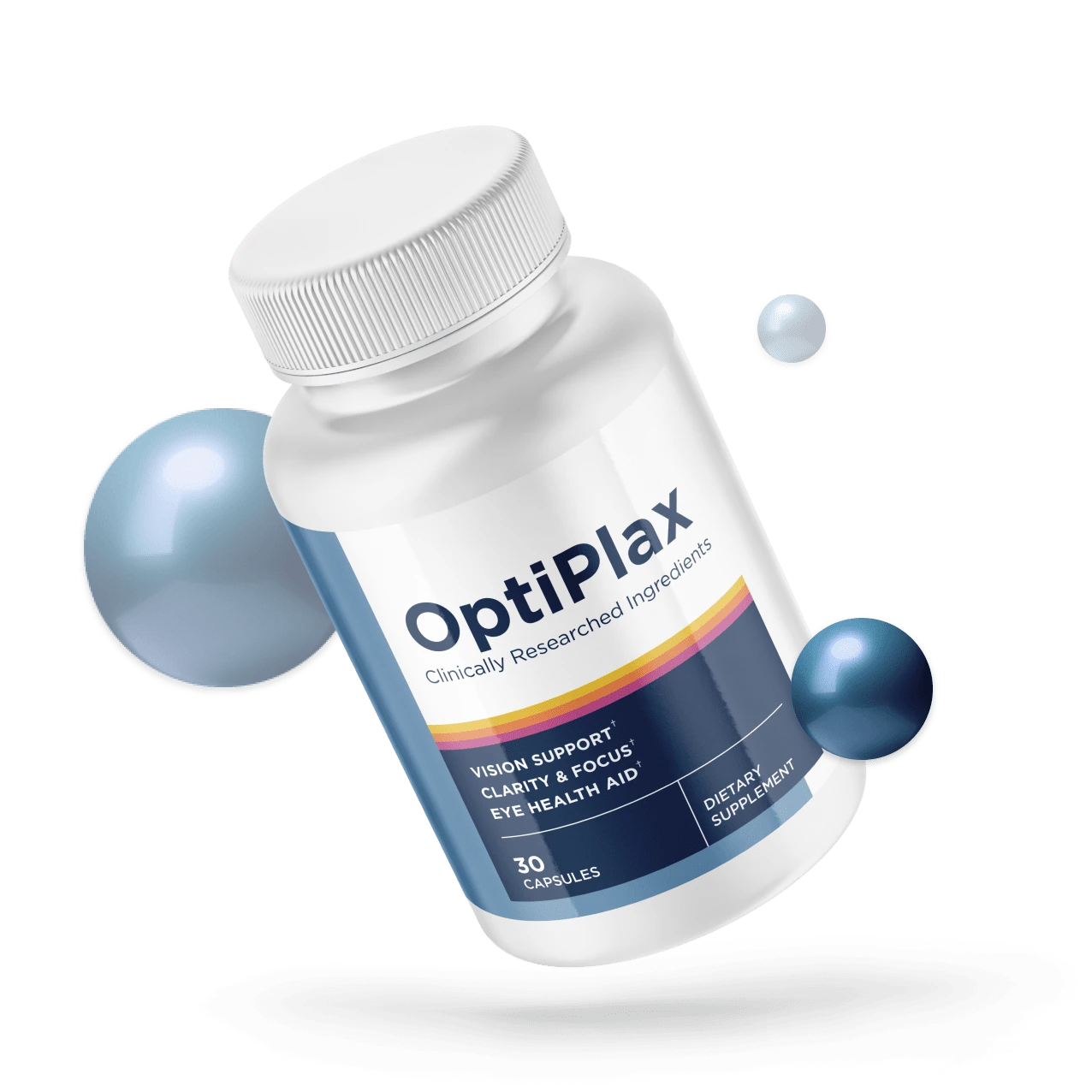
Updated August 2026 · reviewed by the OptiPlax Research Team. We are an independent information resource, not a medical provider, and this article is educational rather than medical advice.
Fucoxanthin is the golden-brown carotenoid pigment of brown seaweed — the antioxidant that colours kelp and wakame, and the standardized active behind the kelp extract in OptiPlax. This guide explains what fucoxanthin actually is, why marine plants make it in the first place, and how its role as a light-managing antioxidant fits into the vision-support approach behind a marine formula like OptiPlax.
What fucoxanthin is, and why it sits in an eye-health formula — in a nutshell.
- What it is
- A golden-brown carotenoid antioxidant from brown seaweeds such as kelp (Laminaria japonica) and wakame.
- Why plants make it
- To harvest blue-green underwater light and to shield their tissues from the oxidative stress of sun and oxygen.
- Why it is in OptiPlax
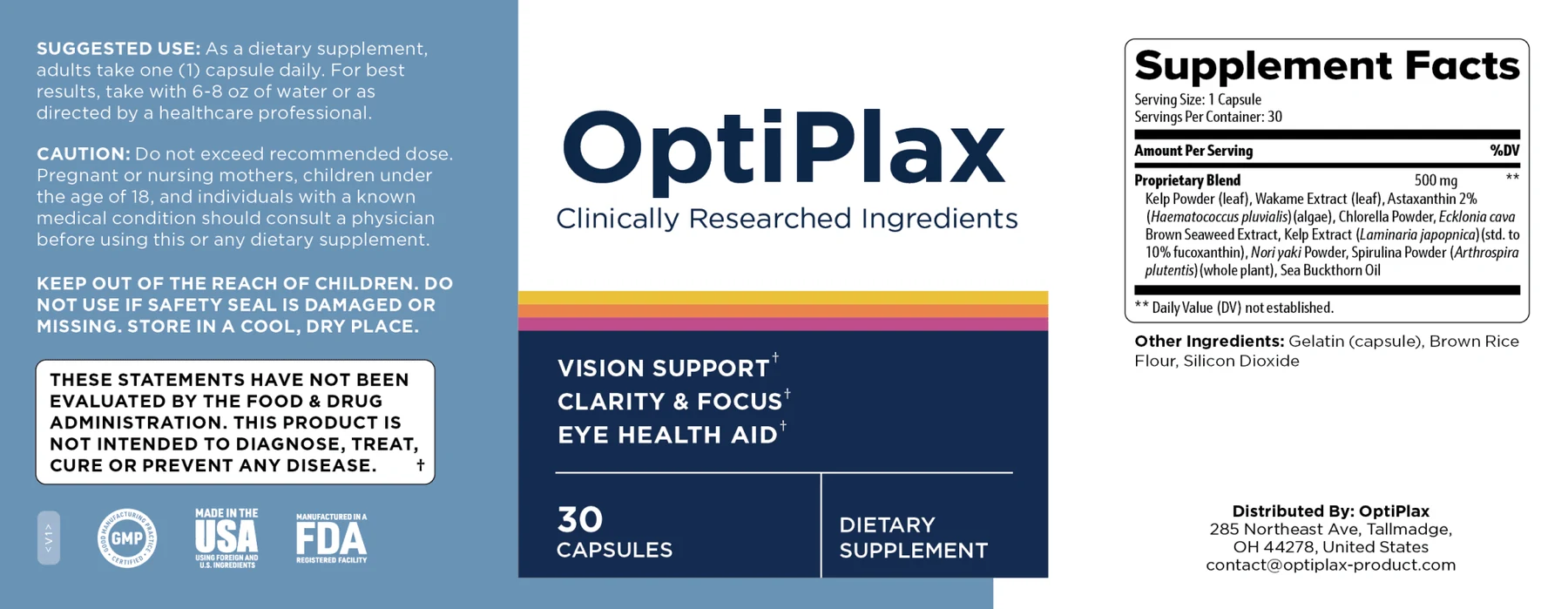
- As a standardized kelp extract (10% fucoxanthin) inside the 500 mg marine blend, it adds antioxidant support to the everyday nutrient needs of the eye.
- Honest caveat
- Most human research on fucoxanthin concerns general and metabolic wellness, not eyesight; it is a support, never a treatment for any eye disease.
If you have read the OptiPlax label and wondered what the “kelp extract, standardized to 10% fucoxanthin” line really means, this article is for you. Below we unpack the science in plain language and show exactly where it sits in the OptiPlax formula.
What is fucoxanthin, exactly?
Fucoxanthin is a xanthophyll carotenoid — an oxygen-containing member of the same broad pigment family as lutein, zeaxanthin and beta-carotene — that gives brown seaweeds their olive-to-golden colour. Chemically it is unusual: it carries an allenic bond and an epoxide group that most other dietary carotenoids lack, and this distinctive structure is thought to explain its strong antioxidant behaviour. It is the single most abundant carotenoid in the marine environment, and it is found throughout edible brown algae such as kelp, wakame and hijiki.
When you eat brown seaweed, gut enzymes convert fucoxanthin into fucoxanthinol and then amarouciaxanthin A, the form that actually circulates and reaches tissues. That conversion is one reason a standardized extract matters: it delivers a known, consistent amount of the parent carotenoid rather than a variable quantity of raw, unmeasured seaweed.
Why do marine plants make fucoxanthin?
Brown seaweeds make fucoxanthin to solve two problems that come with living underwater in the sun. The first is light harvesting: water filters out red light within the first few metres, so the blue-green wavelengths that penetrate deepest are the ones a seaweed must capture to photosynthesise. Fucoxanthin is exceptionally good at absorbing exactly that blue-green band and passing the energy to chlorophyll, which is why brown algae can thrive in dim, deeper water where green plants cannot.
The second problem is oxidative stress. Sunlight plus oxygen plus water is a recipe for reactive oxygen species — unstable molecules that damage delicate cell machinery. As a pigment sitting in the light-harvesting apparatus, fucoxanthin also acts as a built-in sunscreen and antioxidant, quenching that excess energy before it can do harm. This photoprotective job in the plant is precisely what first drew nutrition researchers to fucoxanthin: the same behaviour that protects a kelp frond in bright shallows is what makes it interesting inside the body.
How does fucoxanthin work as an antioxidant?
An antioxidant is a molecule that neutralises reactive oxygen species and slows oxidative damage, and fucoxanthin is studied as a particularly capable one. Its value in a formula is not that it “boosts” anything dramatically, but that it helps the body manage everyday oxidative load — the slow background stress that all light-exposed, oxygen-rich tissues face.
Fucoxanthin is also the pigment most often set against astaxanthin, the red algal carotenoid sitting beside it in the same blend, and the two behave differently enough that it is worth reading the side-by-side comparison of astaxanthin and fucoxanthin for vision before deciding which one you actually care about.
What makes its chemistry unusual?
Most dietary carotenoids quench free radicals well only in fatty environments, but the allenic bond and epoxide group in fucoxanthin let it operate across a wider range of conditions, and laboratory studies consistently rank its radical-scavenging activity highly. That said, most of this evidence comes from test-tube and cell models, so the honest framing is “promising in the lab” rather than “proven in people.”
Why does that matter for the eye?
The retina is one of the most metabolically active and light-exposed tissues in the whole body, which makes oxidative stress a genuine part of the eye-health conversation. Nutrition science has long focused on antioxidant carotenoids for this reason — most famously lutein and zeaxanthin in the macula. Fucoxanthin is a newer, marine addition to that antioxidant toolkit. It is important to be clear: human trials specifically on fucoxanthin and eyesight are still limited, so it belongs in OptiPlax as general antioxidant support alongside better-studied ingredients, not as a stand-alone eye treatment.
See the exact fucoxanthin dose in OptiPlax →
What does the research actually say?
The current evidence on fucoxanthin is strongest for general and metabolic wellness and weakest — meaning simply under-studied — for direct eyesight outcomes. Being honest about where the data is thin is part of an evidence-led approach. The table below summarises where the research stands, in plain terms.
Fucoxanthin’s research base is real but it is not ophthalmic. Reviews describe its antioxidant chemistry and its behaviour as a food component (Miyashita K et al., Archives of Biochemistry and Biophysics, 2020; Din NAS et al., Foods, 2022), and a pharmacokinetic study covers how related brown-seaweed compounds are absorbed and cleared (Shin HC et al., Marine Drugs, 2024). None of this work measured eyesight in people.
| Area studied | Type of evidence | Honest strength |
|---|---|---|
| Antioxidant / radical-scavenging activity | Lab & cell studies | Consistent and well-documented |
| Metabolic & body-composition wellness | Animal + early human trials | Encouraging but preliminary |
| General cellular & inflammatory wellness | Mostly pre-clinical | Mechanistic, not yet confirmed in people |
| Direct eyesight / visual acuity outcomes | Very limited human data | Weak — treat as supportive, not proven |
In short, fucoxanthin earns its place as an antioxidant with real chemistry behind it and a growing but still-early body of human research. Anyone who claims a seaweed carotenoid restores or sharpens vision is overstating the science. Our companion guide to astaxanthin and marine carotenoids for eyes covers the more eye-specific research.
How much fucoxanthin is in OptiPlax?
OptiPlax delivers fucoxanthin through a Laminaria japonica (kelp) extract that is standardized to 10% fucoxanthin, supplied as part of a 500 mg marine blend in a single daily capsule. Standardization is the key word: rather than listing a vague amount of “kelp powder,” a standardized extract guarantees that a fixed percentage of every dose is the active carotenoid, so each capsule is consistent. The table below shows how fucoxanthin sits within the wider marine blend.
| Component | Source | Role in the blend |
|---|---|---|
| Kelp extract (10% fucoxanthin) | Laminaria japonica | Standardized marine antioxidant carotenoid |
| Astaxanthin | Haematococcus pluvialis microalgae | Red carotenoid, the most eye-studied of the group |
| Wakame | Brown seaweed | Whole-food source of additional fucoxanthin |
| Chlorella & spirulina | Freshwater algae | Green whole-food antioxidants and micronutrients |
| Sea buckthorn oil | Coastal berry | Carotenoid and fatty-acid carrier that aids absorption |
Because carotenoids are fat-soluble, the sea buckthorn oil acts as a useful carrier, and taking the capsule with a meal that contains some fat helps absorption. You can see the complete panel in the ingredients section of the OptiPlax review.

Fucoxanthin, in a once-daily capsule
OptiPlax combines standardized kelp fucoxanthin with astaxanthin and a wider marine blend in one daily capsule. The six-bottle bundle is the best value at $49 per bottle, with free U.S. shipping and a 60-day guarantee.
Check today’s OptiPlax pricing — from $49/bottleHow does fucoxanthin fit a vision-support routine?
Fucoxanthin is best understood as one supporting instrument, not the soloist. A sensible eye-health routine still rests on the everyday basics — a colourful, carotenoid-rich diet, regular screen breaks, UV protection outdoors and good sleep — and a marine antioxidant like fucoxanthin adds to the nutritional layer of that routine.
Two practical points help. First, consistency beats intensity: marine carotenoids build their support gradually over weeks, so a daily habit matters more than any single dose. Second, pair it with a meal so you never forget it and the food’s fat aids absorption. For the wider picture, see our guide to supporting healthy vision naturally and the round-up of the best foods and nutrients for eye health.
Who should be cautious with kelp-based fucoxanthin?
Kelp is a naturally iodine-rich food, and that is the single most important caution with any kelp-derived supplement. Iodine is an essential nutrient, but too much can affect thyroid function in sensitive people, so anyone with a thyroid condition, anyone who is pregnant or breastfeeding, and anyone taking thyroid medication should speak with their doctor before starting a kelp-based product. Standardized extracts are formulated with this in mind, but a professional conversation is always the safe route.
More broadly, fucoxanthin is a dietary supplement, not a medicine. It is generally well tolerated in studies so far, but it is not a replacement for a routine eye exam. If you notice sudden vision changes, flashes, floaters, pain or any loss of vision, see an eye-care professional promptly.
Frequently asked questions
What is fucoxanthin?
Fucoxanthin is a golden-brown carotenoid pigment found in brown seaweeds such as kelp and wakame. It is the antioxidant compound that gives these marine plants their characteristic olive-brown colour, and it is the standardized active behind the kelp extract used in OptiPlax.
Why do marine plants make fucoxanthin?
Brown seaweeds make fucoxanthin to harvest the blue-green light that reaches them underwater and to protect their tissues from the oxidative stress of sunlight and oxygen. That light-harvesting, photoprotective job is exactly why researchers became interested in fucoxanthin as a dietary antioxidant.
Is fucoxanthin good for the eyes?
Fucoxanthin is an antioxidant carotenoid studied mainly in laboratory and early clinical settings for general cellular wellness. It is included in OptiPlax as part of a marine-antioxidant blend that supports the eyes’ everyday nutrient needs; it is not a treatment for any eye disease, and human eye-specific evidence remains limited.
How much fucoxanthin is in OptiPlax?
OptiPlax uses a Laminaria japonica (kelp) extract standardized to 10% fucoxanthin, delivered as part of its 500 mg marine blend in one daily capsule. Standardization means each capsule provides a consistent amount of the active carotenoid rather than an unknown quantity of raw seaweed.
What is the difference between fucoxanthin and astaxanthin?
Both are marine carotenoids and antioxidants, but they come from different sources and have different colours. Astaxanthin is a red pigment from microalgae and is the more researched of the two for eye comfort, while fucoxanthin is the golden-brown pigment of brown seaweed studied more for general metabolic and cellular wellness. OptiPlax combines both.
Are there any cautions with fucoxanthin or kelp extract?
Kelp naturally contains iodine, so anyone with a thyroid condition, or who is pregnant or breastfeeding, should speak with a doctor before taking any kelp-based supplement. Fucoxanthin from a standardized extract is generally well tolerated in studies, but it is a supplement, not a medicine, and is not a substitute for professional eye care.
Try OptiPlax risk-free for 60 days →
OptiPlax is a dietary supplement, not a treatment for any medical condition. These statements have not been evaluated by the Food and Drug Administration. This product is not intended to diagnose, treat, cure or prevent any disease. Always consult a qualified healthcare professional about your individual needs.
References & further reading
- Din NAS, et al. Brown Algae as Functional Food Source of Fucoxanthin: A Review. Foods, 2022. pubmed.ncbi.nlm.nih.gov/35954003
- Miyashita K, et al. Nutraceutical characteristics of the brown seaweed carotenoid fucoxanthin. Archives of Biochemistry and Biophysics, 2020. pubmed.ncbi.nlm.nih.gov/32315653
- National Center for Complementary and Integrative Health (NCCIH). Antioxidants: In Depth. nccih.nih.gov/health/antioxidants-in-depth
- National Institutes of Health, Office of Dietary Supplements. Iodine — Fact Sheet for Health Professionals. ods.od.nih.gov/factsheets/Iodine-HealthProfessional
- National Eye Institute (NIH). Keep Your Eyes Healthy. nei.nih.gov/learn-about-eye-health/healthy-vision
- Shin HC, et al. A Pharmacokinetic and Bioavailability Study of Ecklonia cava Phlorotannins. Marine Drugs, 2024. pubmed.ncbi.nlm.nih.gov/39590780
These references describe the ingredient in general terms and do not constitute evidence that any product treats, cures or prevents any condition.
Keep reading: how astaxanthin and marine carotenoids work · the best foods and nutrients for eye health · back to the OptiPlax blog · read the full OptiPlax review.