Chlorella for eye health: what OptiPlax users should know
Updated August 2026 · reviewed by the OptiPlax Research Team. We are an independent information resource, not a medical provider, and this article is educational rather than medical advice.
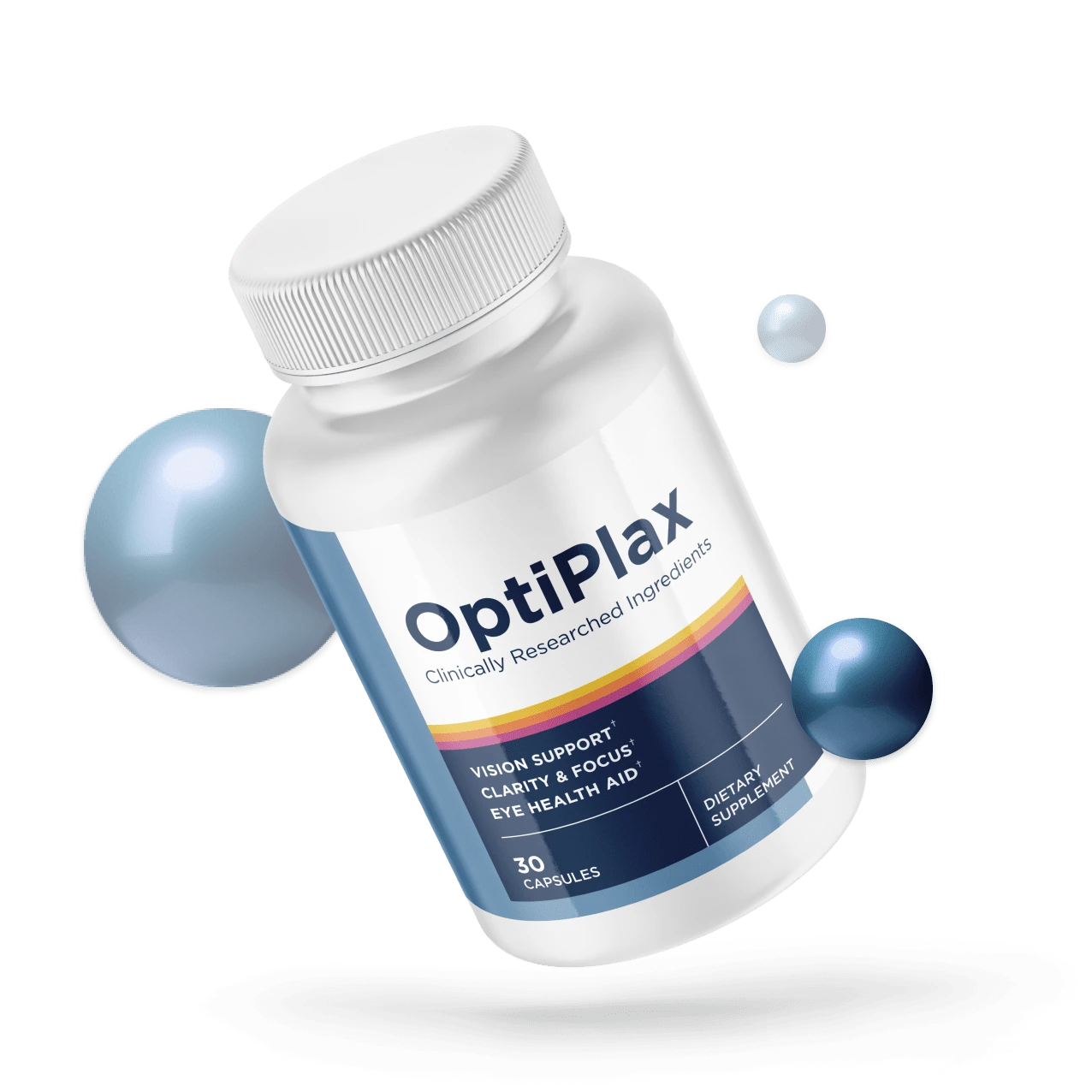
Chlorella is a green freshwater microalga, prized as a whole-food source of chlorophyll, mixed carotenoids and trace nutrients, and it is one of the marine-and-freshwater ingredients blended into OptiPlax. On its own chlorella is not an eye treatment; in a formula it acts as a nutrient-dense partner to the marine carotenoids astaxanthin and fucoxanthin, adding colour-pigment antioxidants and everyday micronutrients to the daily capsule.
What chlorella is, and the honest version of what it does for the eyes.
- What it is
- A single-celled green freshwater alga eaten as a whole food, rich in chlorophyll, carotenoids and trace vitamins and minerals.
- Why it is in OptiPlax
- It rounds out the marine blend with green-algae pigments and micronutrients, complementing astaxanthin and fucoxanthin rather than duplicating them.
- Eye evidence
- Chlorella supplies carotenoids linked to eye nutrition, but direct human eye-outcome trials on chlorella itself are limited — treat it as supportive nutrition, not therapy.
- Who should ask first
- Anyone pregnant, on blood thinners, or with a thyroid or autoimmune condition should check with a doctor, as algae can be high in iodine and vitamin K.
Wondered why a green pond alga sits beside sea-sourced carotenoids on the OptiPlax label? This explainer covers what chlorella is, the pigments it brings, what the evidence shows, and how it fits the wider OptiPlax formula.
What is chlorella, exactly?
Chlorella is a microscopic, single-celled green freshwater alga, and one of the oldest life forms on the planet. Named for its chlorophyll content — chloros is Greek for green — it has been eaten as a nutrient-dense whole food for decades, especially across East Asia. Unlike a synthetic isolate, chlorella is the entire organism dried into a deep-green powder, carrying a spread of pigments, proteins, vitamins and minerals rather than one molecule. That whole-food character is why formulators reach for it.
Because its natural cell wall is tough and largely indigestible to humans, quality chlorella is processed so the wall is cracked or broken. This “cracked cell wall” step is what makes the nutrients inside genuinely available, and it is a useful thing to look for on any algae product.
How is chlorella different from spirulina?
Chlorella and spirulina are easy to confuse. The simplest distinction: chlorella is a true green single-celled alga with a cracked cell wall, while spirulina is a blue-green, spiral-shaped cyanobacterium with no hard wall. Both are nutrient-rich, but chlorella tends to be higher in chlorophyll and carotenoid pigments, the angle most relevant to eye nutrition. OptiPlax includes both.
Which nutrients does chlorella bring to the eyes?
Chlorella's value for eye nutrition comes mainly from its pigments: chlorophyll and a mix of carotenoids, including lutein and beta-carotene. Carotenoids are the same yellow-to-red plant pigments the eye uses at the macula, so a carotenoid-rich alga is a natural fit for a vision-support blend. The table below summarises the components most often cited.
| Component in chlorella | What it is | General / traditional role |
|---|---|---|
| Chlorophyll | Green plant pigment | The pigment that gives chlorella its colour; studied as a dietary antioxidant in general nutrition. |
| Lutein | Macular carotenoid | One of the pigments that concentrate in the macula and help filter high-energy light. |
| Beta-carotene & mixed carotenoids | Provitamin-A pigments | Antioxidant plant pigments; beta-carotene converts to vitamin A, which the retina needs. |
| Vitamin A / carotenoid precursors | Fat-soluble vitamin group | Vitamin A is essential for the light-sensing chemistry of the retina. |
| Trace minerals & B-group vitamins | Micronutrients | Everyday nutritional support; amounts vary by source and are modest per serving. |
Two honest caveats. The headline eye carotenoids, lutein and zeaxanthin, are best documented from foods and concentrated extracts in large trials; chlorella contributes to the pool but is not the star of that research. And amounts in whole-food algae are modest and vary with growing conditions, so chlorella is a contributor, not a high-dose isolate. For the pigments with the strongest eye-specific evidence, see our guide to astaxanthin and marine carotenoids for eyes.

What does the evidence actually say?
The honest summary is that chlorella has encouraging general-nutrition research but limited direct evidence for human vision outcomes. Reviews describe it as a source of antioxidant pigments and protein, with small trials exploring immune and metabolic markers. What is thin is eye-specific trial data on chlorella itself — most robust eye-nutrition evidence involves lutein, zeaxanthin and omega-3s.
Human chlorella trials do exist, but they sit outside ophthalmology entirely: a randomised dietary-cholesterol challenge study looked at blood lipids (Kim S et al., Nutrition Journal, 2016), and the alga’s carotenoid content has been profiled in cultivation research (Pinto AS et al., Bioengineering, 2025). No published trial shows that chlorella changes vision.
That does not make chlorella pointless. As a carotenoid- and chlorophyll-rich whole food, it plausibly contributes to the antioxidant nutrition that supports eye tissues over time. But it is not a proven treatment for any eye disease, and no one should expect it to reverse a condition or replace prescribed care.
See the exact dose in OptiPlax →
How does chlorella fit into the OptiPlax blend?
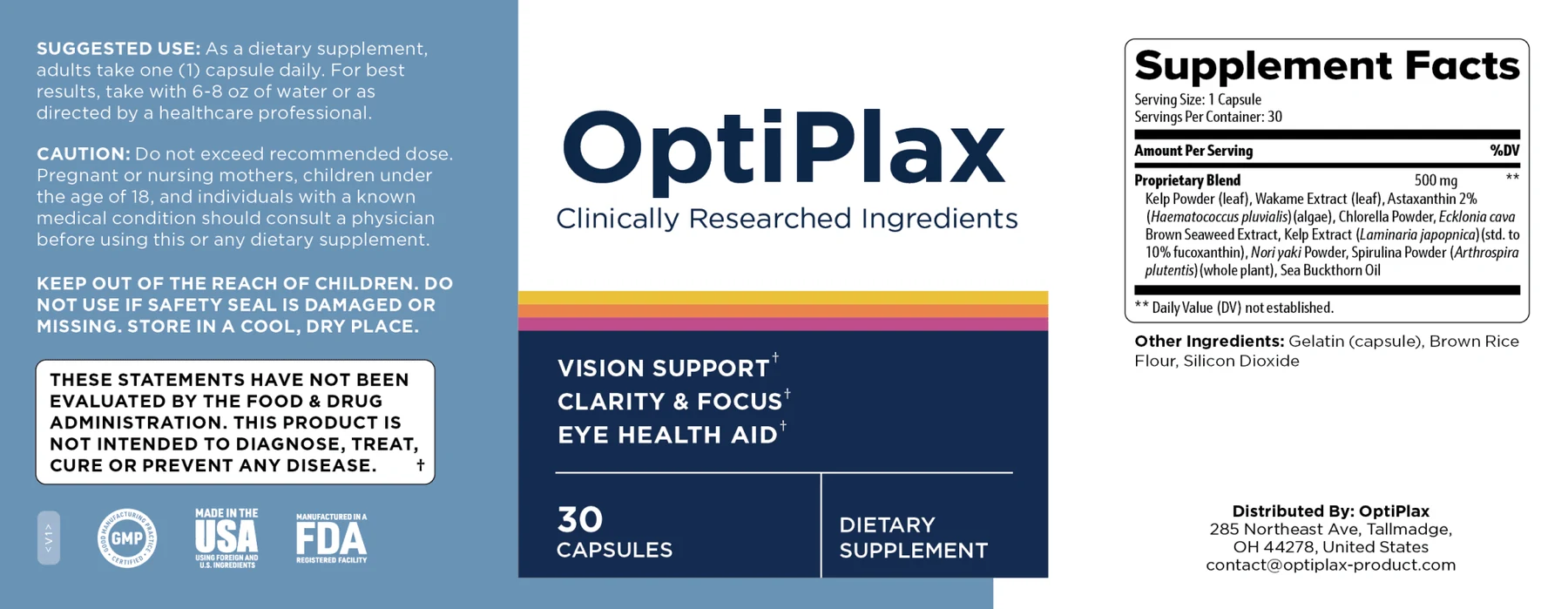
In OptiPlax, chlorella is one green-algae contributor inside a wider marine antioxidant formula, not a headline stand-alone dose. The capsule pairs astaxanthin from Haematococcus pluvialis — the most eye-studied carotenoid in the blend — with a 500 mg sea-and-algae blend of chlorella, fucoxanthin-rich kelp, wakame, spirulina and sea buckthorn oil. Chlorella adds green-pigment carotenoids, chlorophyll and trace micronutrients, broadening the profile beyond any single ingredient.
Think of it as a team: astaxanthin and fucoxanthin bring the most-studied marine carotenoids, chlorella and spirulina add whole-food algae nutrition, and sea buckthorn oil contributes plant fatty acids. For the full line-up and amounts, read the ingredients section or the honest OptiPlax review.

Get the full blend, chlorella included
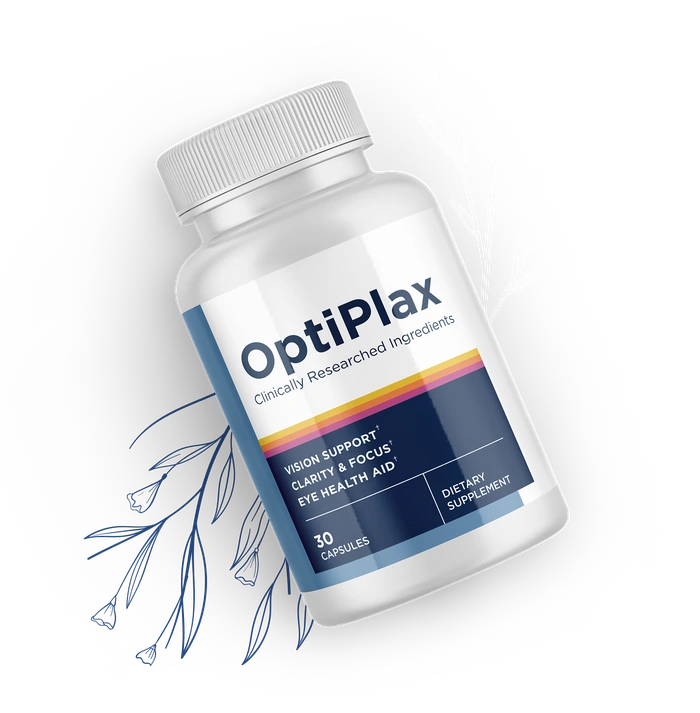
OptiPlax is a once-daily capsule pairing astaxanthin with a 500 mg marine-and-algae blend. The six-bottle bundle is the best value at $49 per bottle, with free U.S. shipping and a 60-day guarantee.
Check today's OptiPlax pricing — from $49/bottleHow much chlorella do you need, and is it safe?
Chlorella is generally considered safe and well tolerated for most healthy adults. Stand-alone servings commonly range from about 1 to 3 grams; in a formula like OptiPlax it is one part of a 500 mg blend, so the intent is nutritional support, not a mega-dose. Starting low and staying consistent is the sensible approach.
The most common side effects are mild and digestive — gas, cramping or looser stools — and tend to settle as the body adjusts. Two points matter: algae can carry meaningful iodine, and chlorella can be relatively high in vitamin K, relevant if you take blood-thinning medication. The table below sorts who can generally use it from who should check first.
| Situation | General guidance | Why |
|---|---|---|
| Healthy adult, balanced diet | Usually fine as a food supplement | Chlorella is a well-tolerated whole food for most people. |
| Sensitive digestion | Start low, take with food | Early gas or loose stools are the most common complaint. |
| On blood thinners | Ask your doctor first | Vitamin K in algae can interact with anticoagulant medication. |
| Thyroid condition | Ask your doctor first | Algae can be high in iodine, which affects the thyroid. |
| Pregnant or breastfeeding | Ask your doctor first | Safety data are limited; professional guidance is best. |
| Autoimmune condition | Ask your doctor first | Algae may influence immune activity; individualise the decision. |
How should you use chlorella for everyday eye support?
The best way to use chlorella is as one steady part of a colourful, nutrient-rich routine rather than a quick fix. Pair it with the everyday habits that do the heavy lifting for eye comfort, and give any nutrient change several weeks to settle in.
- Take it at the same time daily — for OptiPlax, one capsule with water and a meal.
- Keep colour on the plate — leafy greens, orange vegetables and oily fish supply the eye carotenoids food does best.
- Protect your screen habits — the 20-20-20 rule and good lighting ease same-day strain; see how to support healthy vision naturally.
- Be patient and consistent — antioxidant nutrition builds gradually, so judge it over months, not days.
- Keep your eye exams — supplements support nutrition; they do not replace professional care.
For the wider food-first picture, our guide to the best foods and nutrients for eye health shows where algae sits among greens, fish and colourful produce.
When should you see an eye doctor?
Nutrition and whole-food algae support everyday eye health; they are not a substitute for professional care. Keep routine eye exams on the schedule your optometrist recommends, and see a professional promptly for sudden vision changes, flashes or floaters, persistent pain or redness, or any loss of vision. Chlorella and any supplement complement good care, never delay it.
Frequently asked questions
Is chlorella good for eye health?
Chlorella is a nutrient-dense green microalga that supplies chlorophyll, mixed carotenoids and trace vitamins and minerals studied within general nutrition. In OptiPlax it works as a whole-food part of a marine antioxidant blend rather than a stand-alone treatment, and the direct human eye-outcome evidence for chlorella specifically is still limited.
What is chlorella and how is it grown?
Chlorella is a single-celled green freshwater microalga, one of the oldest organisms on earth. It is farmed in ponds or closed tanks, harvested, and then its tough cell wall is broken or cracked so the nutrients inside become easier for the body to absorb. The result is a deep-green powder used in supplements and foods.
How much chlorella is in OptiPlax?
OptiPlax pairs astaxanthin from Haematococcus pluvialis with a 500 mg marine blend that includes chlorella alongside fucoxanthin-rich kelp, wakame, spirulina and sea buckthorn oil. Chlorella is one contributor to that blend, not the only ingredient. Check the current supplement facts panel for the exact amounts.
Does chlorella contain lutein and zeaxanthin?
Chlorella naturally contains a range of carotenoids, and lutein is commonly reported among them, along with chlorophyll and beta-carotene. Lutein and its partner zeaxanthin are the pigments that concentrate in the macula, which is why carotenoid-rich foods and algae are part of the eye-nutrition conversation.
Are there side effects of chlorella?
Chlorella is generally well tolerated, but some people notice mild digestive effects such as gas or loose stools when they first start, and it can be high in iodine and vitamin K. Anyone who is pregnant, takes blood thinners, has a thyroid condition or an autoimmune condition should ask a doctor before using chlorella or any algae supplement.
Can chlorella replace eye drops or an eye exam?
No. Chlorella is a food-based nutrient source, not a medicine, and it is not a substitute for lubricating drops, prescribed treatment or a professional eye exam. Use it as part of a nutrient-rich routine and see an eye-care professional for any sudden vision change, pain, flashes or floaters.
Try OptiPlax risk-free for 60 days →
OptiPlax is a dietary supplement, not a treatment for any medical condition. These statements have not been evaluated by the Food and Drug Administration. This product is not intended to diagnose, treat, cure or prevent any disease. Always consult a qualified healthcare professional about your individual needs.
References & further reading
- National Center for Complementary and Integrative Health (NCCIH). Antioxidants: In Depth. nccih.nih.gov/health/antioxidants-in-depth
- Kim S, et al. A dietary cholesterol challenge study to assess Chlorella supplementation in maintaining healthy lipid levels in adults. Nutrition Journal, 2016. pubmed.ncbi.nlm.nih.gov/27177615
- Examine.com. Chlorella — evidence-based summary. examine.com/supplements/chlorella
- National Institutes of Health, Office of Dietary Supplements. Vitamin A and Carotenoids — Fact Sheet for Health Professionals. ods.od.nih.gov/factsheets/VitaminA-HealthProfessional
- National Eye Institute (NIH). Keep Your Eyes Healthy. nei.nih.gov/learn-about-eye-health/healthy-vision
- Pinto AS, et al. Amino Acid and Carotenoid Profiles of Chlorella vulgaris During Two-Stage Cultivation at Different Salinities. Bioengineering, 2025. pubmed.ncbi.nlm.nih.gov/40150748
- Panahi Y, et al. A randomized controlled trial of 6-week Chlorella vulgaris supplementation in patients with major depressive disorder. Complementary Therapies in Medicine, 2015. pubmed.ncbi.nlm.nih.gov/26275653
These references describe ingredients in general terms and are not evidence that any product treats, cures or prevents any condition.
Keep reading: how astaxanthin and marine carotenoids work · the best foods and nutrients for eye health · back to the OptiPlax blog · homepage.