What to Look For in a Vision Supplement: The OptiPlax Buyer’s Guide
Updated August 2026 · reviewed by the OptiPlax Research Team. We are an independent information resource, not a medical provider, and this article is educational rather than medical advice.
What to look for in a vision supplement comes down to five things: evidence-backed ingredients at meaningful, disclosed doses; honest sourcing (whole-food where it counts); a format you will actually take every day; transparent, GMP-grade manufacturing; and a refund policy that lets you test it without risk. Get those right and the label does the talking; get them wrong and you are mostly paying for marketing.
How to choose a vision support supplement with confidence, in one place.
- The short version
- A good vision supplement pairs well-studied eye carotenoids — astaxanthin, lutein and zeaxanthin — at doses you can see on the label, in a clean, once-daily format; then judge the sourcing, the factory and the refund policy.
- Ingredients
- Look for named carotenoids with disclosed amounts, not a hidden “proprietary blend.”
- Source & format
- Prefer whole-food marine or plant sources where possible, in a once-daily capsule you can keep up.
- Quality
- Made in a GMP-certified, U.S. facility with non-GMO and clear allergen labelling.
- Risk
- A genuine money-back guarantee — OptiPlax offers 60 days — so you can judge it on your own eyes.
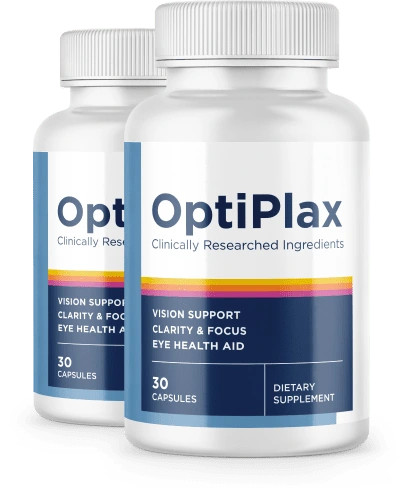
Eye-vitamin marketing is noisy, but the questions that separate a serious formula from a pretty label are the same across the category, so once you know them you can size up any product in a couple of minutes. This guide walks through each one and shows how a marine formula like OptiPlax measures up, so you have a concrete example to compare against.
What should you actually look for in a vision supplement?
A vision supplement is a dietary product designed to supply the antioxidant carotenoids and supporting nutrients the eyes use every day, and the best ones are judged on five things: the formula, the source, the format, the factory and the guarantee. None requires a chemistry degree to check — they are all printed on the label or the company’s own policy pages. Treat anything a brand will not put in writing as a reason for caution. We take each factor in turn below.
Which ingredients matter most in a vision support supplement?
The ingredients that matter most in a vision support supplement are the carotenoids that concentrate in or protect the eye — astaxanthin, lutein and zeaxanthin — supported by antioxidant vitamins and omega-3 fats. Lutein and zeaxanthin gather in the macula, where they help filter high-energy light, while astaxanthin is a marine antioxidant studied for the light-exposed tissues involved in vision. When you scan a label, the first job is to check these are named individually, with amounts, not folded into an undisclosed mix.
Judged strictly by trial depth, lutein and zeaxanthin come first: they are the carotenoids the retina concentrates and the ones tested at scale (AREDS2 Research Group, JAMA, 2013; Lem DW et al., Antioxidants, 2021). Anything marketed as a superior alternative should be asked for the equivalent evidence, and for astaxanthin that evidence is real but much smaller (Donoso A et al., Pharmacological Research, 2021).
| What to look for | Why it matters | What a strong option shows |
|---|---|---|
| Named active carotenoids | Astaxanthin, lutein and zeaxanthin are the most-studied eye carotenoids | Each listed by name, e.g. astaxanthin from Haematococcus pluvialis |
| Meaningful doses | Trace “fairy-dust” amounts look good on a label but do little | Amounts in the range used in research, not a sprinkle |
| Whole-food / marine base | Nutrients from real foods arrive with natural co-factors | A marine blend: kelp, wakame, chlorella, spirulina, sea buckthorn |
| Short excipient list | Fewer fillers, dyes and binders to react to | Non-GMO, gluten- and dairy-free, vegetarian capsule |
| Transparent labelling | You can see exactly what you are taking | Full supplement-facts panel, no hidden proprietary blend |
If you want to go deeper on the two headline carotenoids, our explainer on lutein vs astaxanthin for eyes compares where each one works, and the guide to astaxanthin and marine carotenoids covers the marine side in detail.
Whole-food vs synthetic: does the source really matter?
The source of a nutrient matters because whole-food and marine ingredients tend to deliver carotenoids alongside the natural co-factors that accompany them in real foods, which can make a formula easier to trust. That said, a well-made isolated nutrient can still be consistent and effective, so “synthetic” is not automatically a red flag.
When is whole-food the better choice?
Whole-food sourcing is most valuable for the antioxidant carotenoids at the heart of an eye formula, because pigments such as fucoxanthin and astaxanthin occur naturally in seaweed and algae. A blend built on kelp, wakame, chlorella, spirulina and sea buckthorn oil — the marine base inside OptiPlax — gives you those pigments in the company of the other plant compounds they travel with, rather than as a single isolated molecule.
When is a standardised extract fine?
For vitamins and minerals such as vitamin C, vitamin E and zinc, standardised amounts are perfectly reasonable and make dosing predictable. The practical rule is not “whole-food good, synthetic bad,” but rather: is each active named, is the amount sensible, and is the source stated plainly? If the answer is yes on all three, you are looking at an honest label.
What about dose, format and how you take it?
The best vision supplement is the one you will actually take every day, which is why dose and format matter as much as the ingredient list. A once-daily capsule is easy to anchor to an existing habit, while powders and fiddly multi-pill regimens are the first thing people abandon. On dose, human studies of astaxanthin have generally used a few milligrams a day, and the important thing is that the number appears on the label rather than hiding inside a blend.
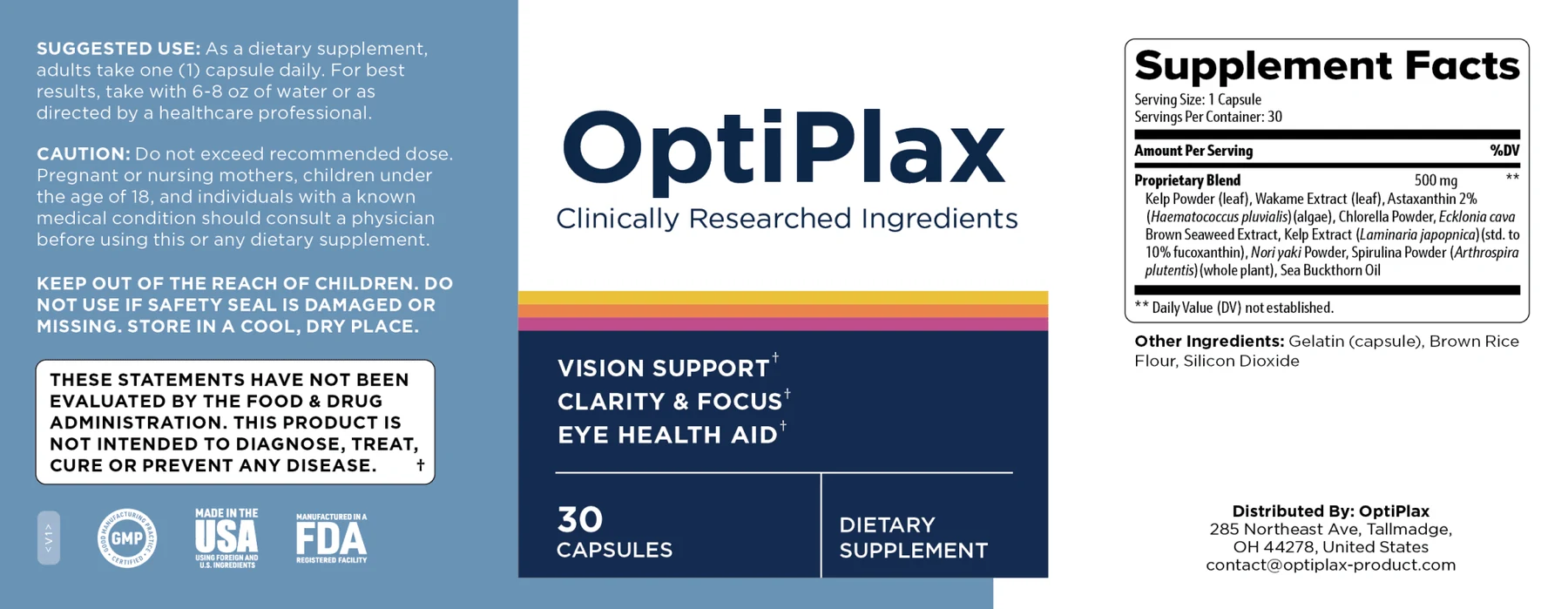
OptiPlax is built around this idea: one capsule a day, pairing astaxanthin from Haematococcus pluvialis with a 500 mg marine carotenoid blend, so there is nothing to measure and nothing to forget. Want to see the exact dose in OptiPlax before you compare? The full panel is on the ingredients section of the homepage.
How do you judge quality, sourcing and manufacturing?
Quality in a supplement is mostly about the factory behind it, so look for a product made in a GMP-certified facility — ideally in the USA — with non-GMO status and clear allergen labelling. Good Manufacturing Practice standards govern cleanliness, testing and batch consistency, which is what turns a nice recipe into a reliable bottle. A short excipient list and a company address you can actually find are reassuring extras.
Quality signals are easier to weigh against a fixed checklist, and the companion guide on how to choose an eye health supplement lays one out step by step, from dose disclosure through to the refund window.

OptiPlax is made in the USA in a GMP-certified facility and is non-GMO, gluten-free, dairy-free and vegetarian — the kind of baseline that lets the formula, rather than the fine print, be the deciding factor.

Compare OptiPlax against your checklist
Named carotenoids, a 500 mg marine blend, a once-daily capsule, GMP manufacturing and a 60-day guarantee. The six-bottle bundle is the best value at $49 per bottle with free U.S. shipping.
Check today’s OptiPlax pricing — from $49/bottleWhy does the refund policy matter when choosing eye vitamins?
The refund policy matters because vision and antioxidant support builds gradually, so you cannot fairly judge a product in a day or two. A genuine money-back guarantee shifts that risk from you to the company, and a window of 30 to 60 days is a reasonable minimum. Watch for guarantees that quietly exclude opened bottles or add restocking fees, because a promise you cannot actually use is just decoration.

| Buyer checklist | What to ask | How OptiPlax measures up |
|---|---|---|
| Evidence-backed actives | Are the carotenoids named and studied? | Astaxanthin plus a 500 mg marine carotenoid blend, each ingredient named |
| Format | Can I take it daily without fuss? | One capsule a day with water |
| Sourcing | Whole-food or lab-only? | Marine whole-food sources: kelp, wakame, chlorella, spirulina, sea buckthorn |
| Manufacturing | GMP, U.S.-made, non-GMO? | Made in the USA in a GMP-certified facility, non-GMO |
| Allergen profile | Does it suit my diet? | Gluten-free, dairy-free, vegetarian capsule |
| Guarantee | Can I try it risk-free? | 60-day money-back guarantee, free U.S. shipping on bundles |
How does OptiPlax measure up against the checklist?
Held against the five buyer criteria, OptiPlax reads as a straightforward, honest option rather than a miracle: named marine carotenoids at disclosed amounts, a once-daily capsule, whole-food sourcing, GMP-certified U.S. manufacturing, and a 60-day guarantee. It will not out-argue a colourful diet, good screen habits and regular eye exams — nothing in a bottle does — but as the supplement slice of an eye-care routine it ticks the boxes a careful buyer should check. For the fuller picture, our OptiPlax review walks through the formula and pricing, and the best foods and nutrients for eye health covers the diet side any supplement supports.
When should you talk to an eye doctor?
A supplement supports everyday vision; it is never a replacement for professional eye care. Book routine eye exams on the schedule your optometrist recommends, and see a professional promptly if you notice sudden vision changes, flashes or floaters, persistent pain or redness, or any loss of vision. If you take medication or have an existing eye condition, check with your doctor before starting any new supplement, including OptiPlax.
Frequently asked questions
What should you look for in a vision supplement?
Look for named, well-studied eye carotenoids — astaxanthin, lutein and zeaxanthin — at disclosed amounts rather than a hidden proprietary blend, in a format you can take daily. Then judge the sourcing, the manufacturing standards and the refund policy, because those show whether the company stands behind what is inside. No supplement treats eye disease; the best ones simply support a nutrient-rich diet and good screen habits.
Are whole-food vision supplements better than synthetic ones?
Whole-food and marine sources deliver nutrients alongside natural co-factors and are often easier to trust on a label, but a well-made synthetic nutrient can still be effective and consistent. The more useful question is whether each active is named, dosed sensibly and sourced transparently. OptiPlax leans on whole-food marine sources such as kelp, wakame, chlorella, spirulina and sea buckthorn oil.
What dose of astaxanthin should a vision supplement contain?
Human studies on astaxanthin have commonly used a few milligrams per day, and the key is that the amount is stated on the label rather than buried in a blend. Avoid products that list astaxanthin only as part of an undisclosed proprietary mix. OptiPlax names its astaxanthin from Haematococcus pluvialis alongside a 500 mg marine carotenoid blend.
How can you tell if an eye vitamin is made in a quality facility?
Check that the product is made in a GMP-certified facility, ideally in the USA, with non-GMO and clear allergen labelling. A full supplement-facts panel and a short, understandable excipient list are good signs. OptiPlax is made in the USA in a GMP-certified facility and is non-GMO, gluten-free, dairy-free and vegetarian.
Does a money-back guarantee really matter when choosing eye vitamins?
Yes. Because vision and antioxidant support builds gradually over weeks to months, a genuine refund window lets you judge a product on your own eyes rather than on marketing. A 30- to 60-day guarantee is a reasonable minimum. OptiPlax offers a 60-day money-back guarantee with free U.S. shipping on its bundles.
Can a vision supplement replace a healthy diet and eye exams?
No. A vision supplement is designed to support a colourful, nutrient-rich diet and good screen and light habits, not to replace them, and it is never a substitute for regular eye exams. See a professional promptly for any sudden vision changes, flashes, floaters, pain or loss of vision.
See the exact dose in OptiPlax — try it risk-free for 60 days →
OptiPlax is a dietary supplement, not a treatment for any medical condition. These statements have not been evaluated by the Food and Drug Administration. This product is not intended to diagnose, treat, cure or prevent any disease. Always consult a qualified healthcare professional about your individual needs.
References & further reading
- National Eye Institute (NIH). Keep Your Eyes Healthy. nei.nih.gov/learn-about-eye-health/healthy-vision
- National Center for Complementary and Integrative Health (NCCIH). Dietary and Herbal Supplements — how to be a smart consumer. nccih.nih.gov/health/using-dietary-supplements-wisely
- National Institutes of Health, Office of Dietary Supplements. Dietary Supplements: What You Need to Know. ods.od.nih.gov/factsheets/WYNTK-Consumer
- Examine.com. Astaxanthin — evidence-based summary. examine.com/supplements/astaxanthin
- Age-Related Eye Disease Study 2 Research Group. Lutein + zeaxanthin and omega-3 fatty acids for age-related macular degeneration: the AREDS2 randomized clinical trial. JAMA, 2013. pubmed.ncbi.nlm.nih.gov/23644932
- Mayo Clinic. Dietary supplements: Do they help or hurt? mayoclinic.org/healthy-lifestyle/nutrition-and-healthy-eating
- Lem DW, et al. A Systematic Review of Carotenoids in the Management of Age-Related Macular Degeneration. Antioxidants, 2021. pubmed.ncbi.nlm.nih.gov/34439503
- Donoso A, et al. Therapeutic uses of natural astaxanthin: an evidence-based review focused on human clinical trials. Pharmacological Research, 2021. pubmed.ncbi.nlm.nih.gov/33549728
These references describe the ingredients and habits in general terms and do not constitute evidence that any product treats, cures or prevents any condition.
Keep reading: lutein vs astaxanthin for eyes · the best foods and nutrients for eye health · back to the OptiPlax blog · homepage.