Spirulina vs chlorella for eyes: how OptiPlax uses both
Updated August 2026 · reviewed by the OptiPlax Research Team. We are an independent information resource, not a medical provider, and this article is educational rather than medical advice.
Spirulina and chlorella are two different microalgae that both appear in OptiPlax: spirulina is a protein-rich blue-green algae coloured by the pigment phycocyanin, while chlorella is a true green algae unusually rich in chlorophyll and in the eye carotenoids lutein and zeaxanthin. For eye nutrition their strengths are complementary rather than identical, which is exactly why a marine formula tends to use both instead of choosing one. Neither is a treatment for any eye condition; they are whole-food antioxidants that support a nutrient-rich diet and regular eye care.
Spirulina vs chlorella for eyes, decided in one box.
- Spirulina in a line
- Blue-green algae, no true cell wall, high protein, and rich in the blue antioxidant phycocyanin plus beta-carotene and zeaxanthin.
- Chlorella in a line
- True green algae with a tough cell wall and one of the highest chlorophyll levels in any food, plus a notable dose of lutein and zeaxanthin.
- For the macula
- Chlorella is the stronger dietary source of lutein and zeaxanthin, the pigments that concentrate in the macula and filter high-energy light.
- Why not just one?
- Their carotenoid and antioxidant profiles overlap only partly, so a blend covers more ground than either alone.
Spirulina and chlorella look similar on a shelf, yet they are biologically distinct organisms with different pigments, cell structures and nutrient balances. Below we walk through those differences plainly, show what each brings to eye nutrition, and explain how OptiPlax uses the pair as part of a broader marine-carotenoid blend.
What is the difference between spirulina and chlorella?
The core difference is that spirulina is a blue-green algae, technically a cyanobacterium, while chlorella is a true single-celled green algae. That single fact explains almost everything else. Spirulina has no rigid cellulose cell wall, so its nutrients are easy to absorb, and it carries the blue-green pigment phycocyanin on top of its chlorophyll. Chlorella is a rounded green cell wrapped in a tough wall (which must be "cracked" during processing so we can digest it) and it holds one of the densest concentrations of chlorophyll found in any food. In nutritional shorthand: spirulina is the protein-and-phycocyanin algae, chlorella is the chlorophyll-and-carotenoid algae.
| Feature | Spirulina | Chlorella |
|---|---|---|
| Type | Blue-green algae (cyanobacterium) | True green micro-algae |
| Cell wall | Soft, no cellulose wall | Tough cellulose wall (cracked for absorption) |
| Signature pigment | Phycocyanin (blue) + chlorophyll | Chlorophyll (very high) + carotenoids |
| Protein | Very high (about 60–70% by weight) | High (about 50–60% by weight) |
| Eye carotenoids | Zeaxanthin, beta-carotene | Lutein & zeaxanthin (notable) |
| Best known for | Phycocyanin antioxidant, protein | Chlorophyll, lutein, detox binding |
Blue-green vs green algae: why does the colour matter?
The colour difference is not cosmetic; it reflects which light-harvesting pigments each organism carries, and those pigments are the antioxidants we are interested in. Spirulina's blue-green hue comes from phycocyanin, a water-soluble pigment-protein behind much of its antioxidant reputation. Chlorella's deep green comes from an exceptionally high load of chlorophyll, layered over a green-yellow carotenoid mix. For eyes, the carotenoids riding alongside those primary pigments matter most, because a subset of them — the xanthophylls lutein and zeaxanthin — are the very pigments the human macula selectively accumulates.
What pigments does each algae bring to eye nutrition?
Eye nutrition is largely a story about carotenoids, and spirulina and chlorella contribute different members of that family. Understanding which pigment comes from where is the clearest way to see why a blend is more complete than either single algae.
What does spirulina contribute?
Spirulina's headline compound for eyes is phycocyanin, an antioxidant pigment studied for its free-radical-scavenging behaviour in general cellular research. Spirulina also supplies zeaxanthin and beta-carotene (a vitamin A precursor), plus a broad base of protein, B-vitamins and iron. Its zeaxanthin content is meaningful because zeaxanthin is one of the two macular pigments, but spirulina is comparatively low in lutein.
What does chlorella contribute?
Chlorella's standout for eyes is its carotenoid pairing of lutein and zeaxanthin, the two xanthophylls that concentrate in the macula and help filter blue light. It is one of the more concentrated whole-food sources of these pigments, alongside its very high chlorophyll and a distinctive nucleotide-peptide fraction (often marketed as "Chlorella Growth Factor"). For a deeper look, see our dedicated guides to chlorella for eye health and spirulina for eye health.
Where do the profiles overlap?
Both algae share zeaxanthin, beta-carotene, chlorophyll and a strong general antioxidant capacity, and both are complete-protein foods. The gap is mostly in lutein and phycocyanin: chlorella wins clearly on lutein, spirulina is the only common food source of phycocyanin. That partial overlap is the practical case for using both.

Both algae, one daily capsule
Rather than blending two powders yourself, OptiPlax pairs spirulina and chlorella with astaxanthin in a single 500 mg marine blend. See the exact dose in OptiPlax on the label, and the six-bottle bundle is the best value at $49 per bottle with free U.S. shipping and a 60-day guarantee.
See the exact dose in OptiPlax — from $49/bottleHow do their nutrient profiles compare at a glance?
A side-by-side of the eye-relevant nutrients makes the trade-off concrete. The figures below are typical ranges reported for commercial algae and vary by strain, growing conditions and processing, so treat them as a directional comparison rather than exact label values.
| Nutrient (per gram, typical) | Spirulina | Chlorella | Relevance to eyes |
|---|---|---|---|
| Lutein | Low | High | Macular pigment; filters high-energy light |
| Zeaxanthin | Moderate | Moderate | Macular pigment; antioxidant |
| Phycocyanin | High | None | Blue antioxidant pigment (spirulina-only) |
| Chlorophyll | Moderate | Very high | General antioxidant support |
| Beta-carotene | High | Moderate | Vitamin A precursor |
| Protein | Very high | High | Structural nutrition, not eye-specific |
Read across the table and the pattern is clear: chlorella is the lutein source, spirulina is the phycocyanin source, and they meet in the middle on zeaxanthin, beta-carotene and chlorophyll. If you cared only about macular carotenoids, chlorella would edge ahead; if you cared about phycocyanin, only spirulina qualifies. Most people, and most formulators, want both columns.
Which is better for your eyes — or do you need both?
For eye-specific carotenoids, chlorella is the stronger single choice because it carries meaningful lutein and zeaxanthin together, while spirulina brings phycocyanin and protein that chlorella cannot match. Framing it as a winner-takes-all contest misses the point: these are complementary foods, and the honest answer for most people is "both, in sensible amounts." That is why blended products exist. As always, neither is a substitute for a colourful diet, screen breaks and routine eye exams.
How does OptiPlax use spirulina and chlorella together?
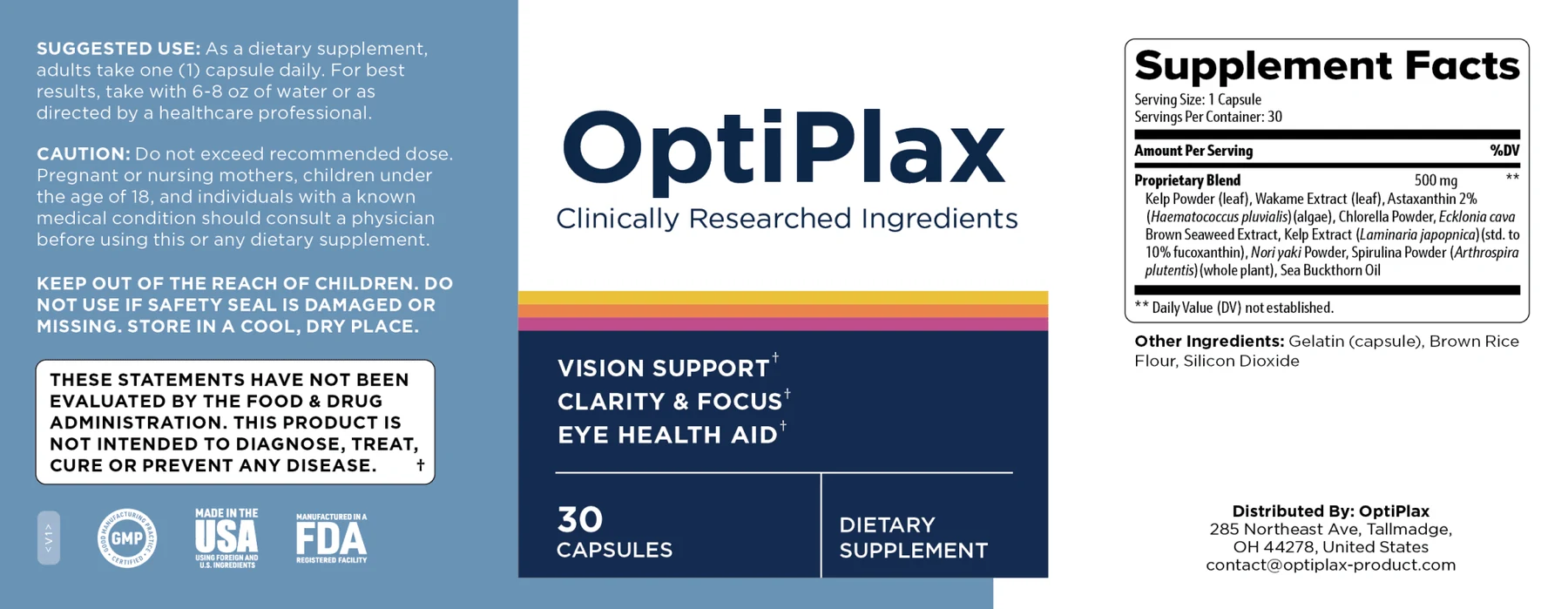
OptiPlax treats spirulina and chlorella as two members of a wider marine team rather than a headline act. Both sit inside a 500 mg blend that also carries fucoxanthin-rich kelp and wakame plus sea buckthorn oil, and the capsule is anchored by astaxanthin from Haematococcus pluvialis, the red microalgal carotenoid. The logic is straightforward: astaxanthin and fucoxanthin cover the red and golden marine carotenoids, chlorella supplies the green macular xanthophylls lutein and zeaxanthin, and spirulina adds phycocyanin and protein density. Together they span more of the carotenoid rainbow than any single ingredient could. The precise per-ingredient amounts are printed on the Supplement Facts panel, and you can read how the marine carotenoids fit together in our astaxanthin and marine carotenoids guide.
What does the evidence actually say?
Honesty matters here: the direct human evidence that either algae improves vision is limited, and most research addresses general antioxidant activity rather than eye outcomes. Lutein and zeaxanthin themselves have the strongest eye-nutrition literature, and chlorella is simply one dietary route to them, while spirulina's phycocyanin is studied mainly in laboratory settings. So the reasonable claim is a nutritional one — these algae supply pigments the eye uses — not a medical one. The sensible framing is everyday nutritional support alongside proven habits, not treatment for any eye disease.
Neither alga has been tested against vision outcomes in people. Chlorella’s human trials cover blood lipids (Kim S et al., Nutrition Journal, 2016) and its carotenoid content has been profiled in cultivation studies (Pinto AS et al., Bioengineering, 2025), while spirulina’s phycocyanin evidence remains mechanistic (Huang H et al., The American Journal of Chinese Medicine, 2026). Comparing them for eye benefit therefore means comparing nutrient profiles, not results.
Who might want an algae blend like this?
An algae blend tends to suit people who spend long hours on screens, eat few leafy greens, follow a plant-forward diet, or simply want a once-daily way to add whole-food carotenoids without juggling several powders. It is not right for everyone: if you are pregnant, have a thyroid or autoimmune condition, take blood thinners, or manage any eye disease, talk to your doctor first, and always choose algae tested for heavy metals and microcystins.
Check today's OptiPlax pricing →
Frequently asked questions
What is the main difference between spirulina and chlorella?
Spirulina is a blue-green algae (a cyanobacterium) with no true cell wall, coloured by the blue pigment phycocyanin alongside chlorophyll. Chlorella is a true single-celled green algae with a tough cellulose cell wall and one of the highest chlorophyll contents of any food. In short, spirulina leans toward protein and phycocyanin, while chlorella leans toward chlorophyll and, notably for eyes, the carotenoids lutein and zeaxanthin.
Which algae is better for eye health, spirulina or chlorella?
Neither treats any eye condition, and for the specific carotenoids that concentrate in the macula — lutein and zeaxanthin — chlorella is the richer source. Spirulina contributes different antioxidants such as phycocyanin and zeaxanthin too. Because their strengths differ, many formulas, OptiPlax included, use both rather than choosing one.
Does spirulina or chlorella contain lutein and zeaxanthin?
Both contain carotenoids, but chlorella is the more notable dietary source of lutein and zeaxanthin, the two pigments that accumulate in the macula and help filter high-energy light. Spirulina supplies zeaxanthin and beta-carotene along with its signature phycocyanin. This complementary carotenoid profile is one reason a blend can make sense.
Is it safe to take spirulina and chlorella together?
For most healthy adults, culinary and supplement amounts of both algae are generally well tolerated, and they are often combined. Quality matters: choose algae tested for heavy metals and microcystins. Anyone who is pregnant, has an autoimmune or thyroid condition, takes blood thinners, or has a medical condition should ask their doctor first, as this is general information rather than medical advice.
How much spirulina and chlorella are in OptiPlax?
OptiPlax pairs astaxanthin from Haematococcus pluvialis with a 500 mg marine blend that includes both spirulina and chlorella alongside fucoxanthin-rich kelp, wakame and sea buckthorn oil, in one daily capsule. The exact per-ingredient amounts are shown on the product label and Supplement Facts panel.
Can algae supplements replace eating vegetables for eye health?
No. Spirulina and chlorella are concentrated whole-food sources of pigments and antioxidants, but they complement a colourful diet rich in leafy greens, orange vegetables and omega-3 fish rather than replacing it. Supplements support good habits and regular eye exams; they are not a substitute for either.
Try OptiPlax risk-free for 60 days →
OptiPlax is a dietary supplement, not a treatment for any medical condition. These statements have not been evaluated by the Food and Drug Administration. This product is not intended to diagnose, treat, cure or prevent any disease. Always consult a qualified healthcare professional about your individual needs.
References & further reading
- National Institutes of Health, Office of Dietary Supplements. Vitamin A and Carotenoids — Fact Sheet for Health Professionals. ods.od.nih.gov/factsheets/VitaminA-HealthProfessional
- National Center for Complementary and Integrative Health (NCCIH). Antioxidants: In Depth. nccih.nih.gov/health/antioxidants-in-depth
- Pinto AS, et al. Amino Acid and Carotenoid Profiles of Chlorella vulgaris During Two-Stage Cultivation at Different Salinities. Bioengineering, 2025. pubmed.ncbi.nlm.nih.gov/40150748
- Huang H, et al. Phycocyanin: Biomedical Activities and Related Mechanisms of Action. The American Journal of Chinese Medicine, 2026. pubmed.ncbi.nlm.nih.gov/42057257
- Examine.com. Spirulina — evidence-based summary. examine.com/supplements/spirulina
- National Eye Institute (NIH). Keep Your Eyes Healthy. nei.nih.gov/learn-about-eye-health/healthy-vision
- Kim S, et al. A dietary cholesterol challenge study to assess Chlorella supplementation in maintaining healthy lipid levels in adults. Nutrition Journal, 2016. pubmed.ncbi.nlm.nih.gov/27177615
These references describe the ingredients in general terms and do not constitute evidence that any product treats, cures or prevents any condition.
Keep reading: chlorella for eye health · spirulina for eye health · the full OptiPlax review · back to the OptiPlax blog.